Me Myself

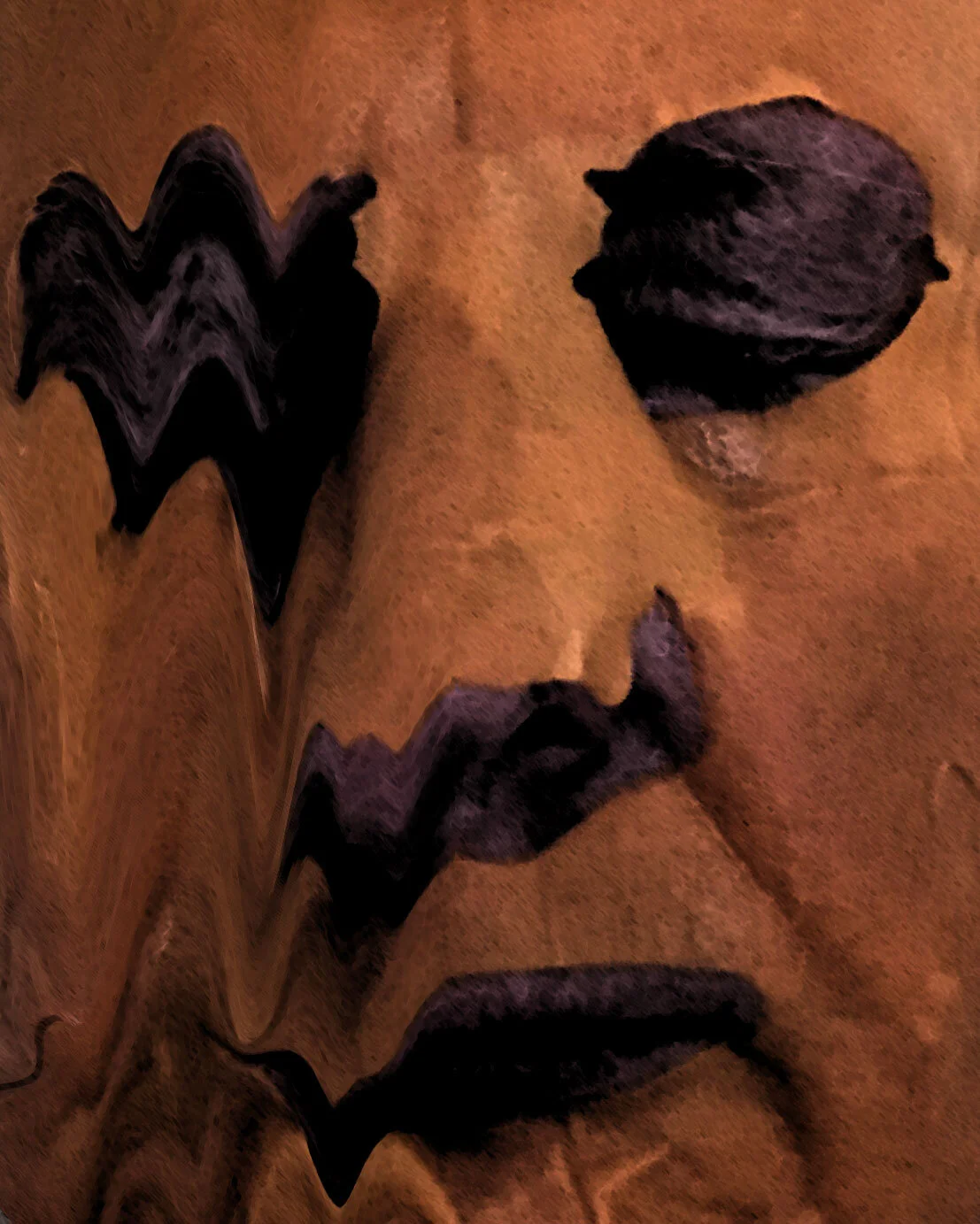
It was at this point I added my self into the project as a 6-month-old baby. It has been documented in earlier projects, that I do not wish to show the faces of my siblings. With this image, I tried several techniques to hide my brother's faces from simply blurring them to using coloured squares; however, I find this method of warping the image more satisfying.

Robert McMillan 6 months old 1963

Robert McMillan 6 months old 1963

Letters

Letters are an essential aspect of my archive, and I intend to use more in later work. I was inspired by many books, mainly Davidmann's book Ken - to be destroyed and Red Headed Peckerwood to some extent. I find the written word connects the reader directly with the feelings of the writer. Nothing to be lost through time! I decided to highlight the words which had the most meaning. I wanted it to look like a ransom letter, almost threatening.

Letter of condolence following my Grandmothers death

Letter of condolence following my Grandmothers death

Carl -Mikael Strom

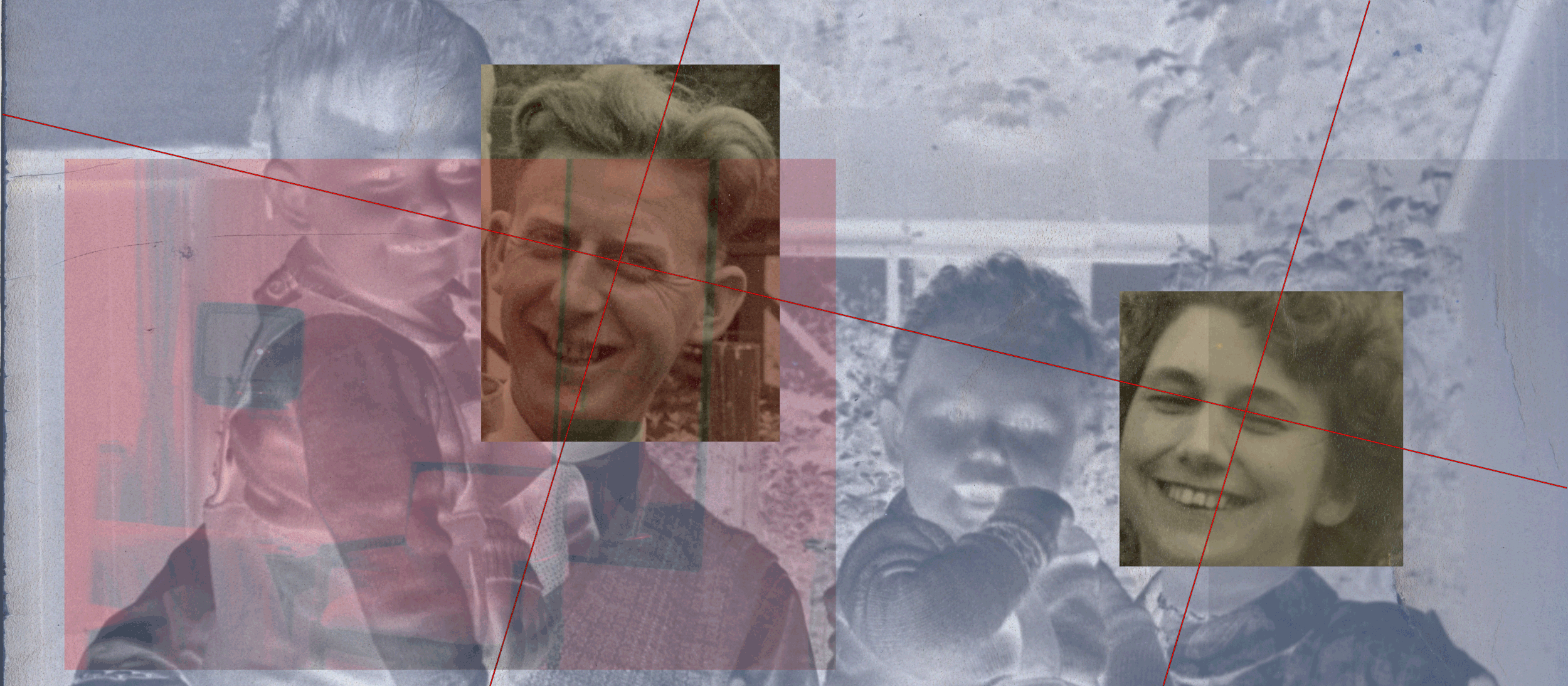
Carl Strom's book Montoristen uses the negative as a narrative to describe being lost. This slide is based on that concept. The partially concealed Red Room in the background is where my Father stayed after my mother's death. I made this image with this in mind and tried to reflect his loss at that time to happier days. I'm not sure if this image is successful and maybe too complicated?

Montage of my Parents and Siblings 2020

Montage of my Parents and Siblings 2020

Archive Play

Kiiski in her book, Archive Play skillfully uses shapes and lines to create rhythm and flow to her images. Her practice deals with the relationships between fiction and reality. Kiiski use of colour and shapes concentrates the focus on the movement of the figure, adding movement and dynamic form. I find this a fascinating concept, and one I shall visit again.

Kehrer, 2014 Archive Play Compositions Studies (Triangle),

Kehrer, 2014 Archive Play Compositions Studies (Triangle),

Combining Images

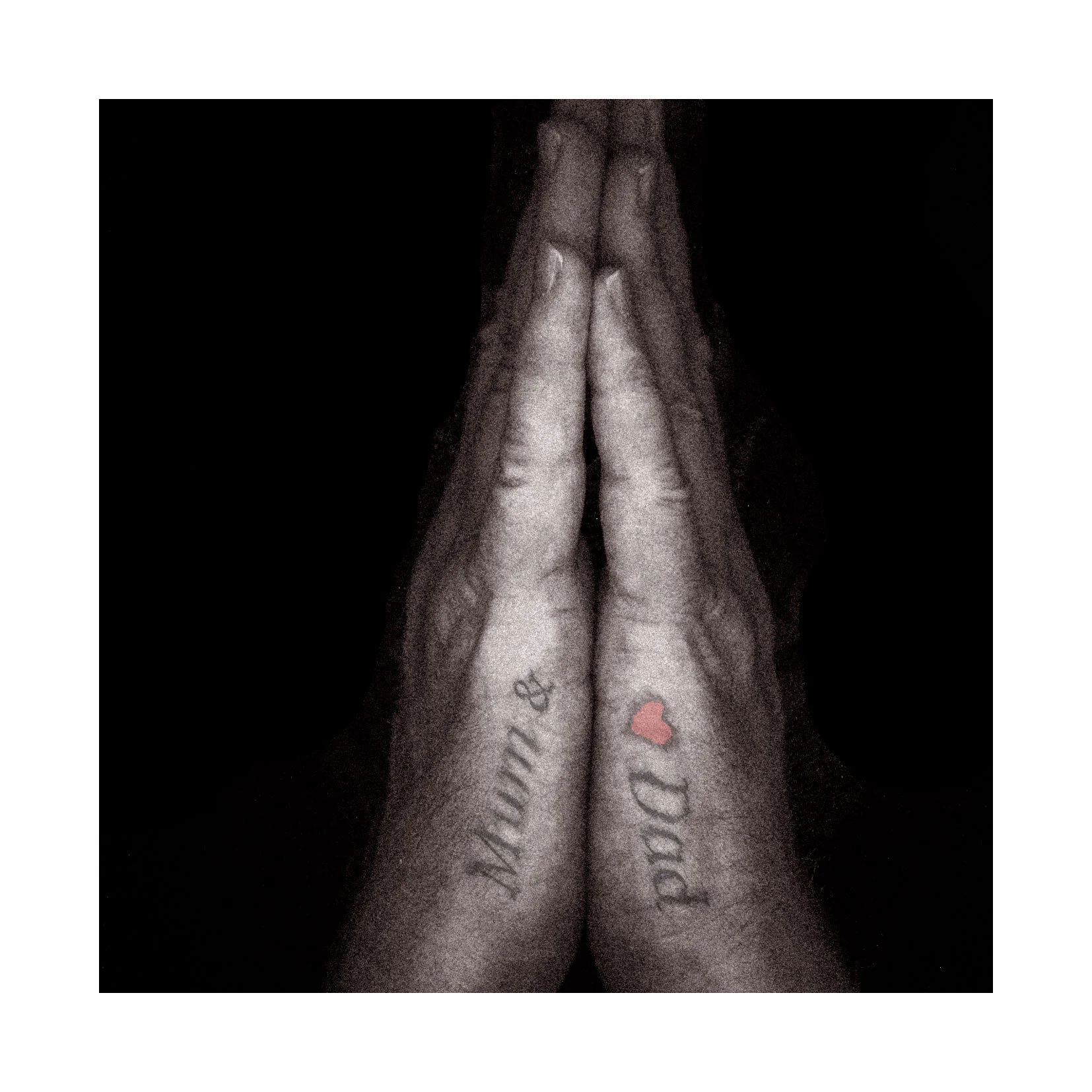
I used the images I had taken with the photocopier and decided to make them more meaningful. I liked the concept of placing my mother’s image in the palm of my hand (Fig 1) and also my father, although that was not as successful (Fig 2). The final image is using tattoos created in Photoshop and mapping them on to the image (Fig 3). I’ve used this technique before but many years ago so I had to relearn what to do! I also gave the images a slight tint to warm the tone.

Fig.1

Fig.1

Fig 2

Fig 2

Fig 3

Fig 3

First Tutorial with Laura Nissinen

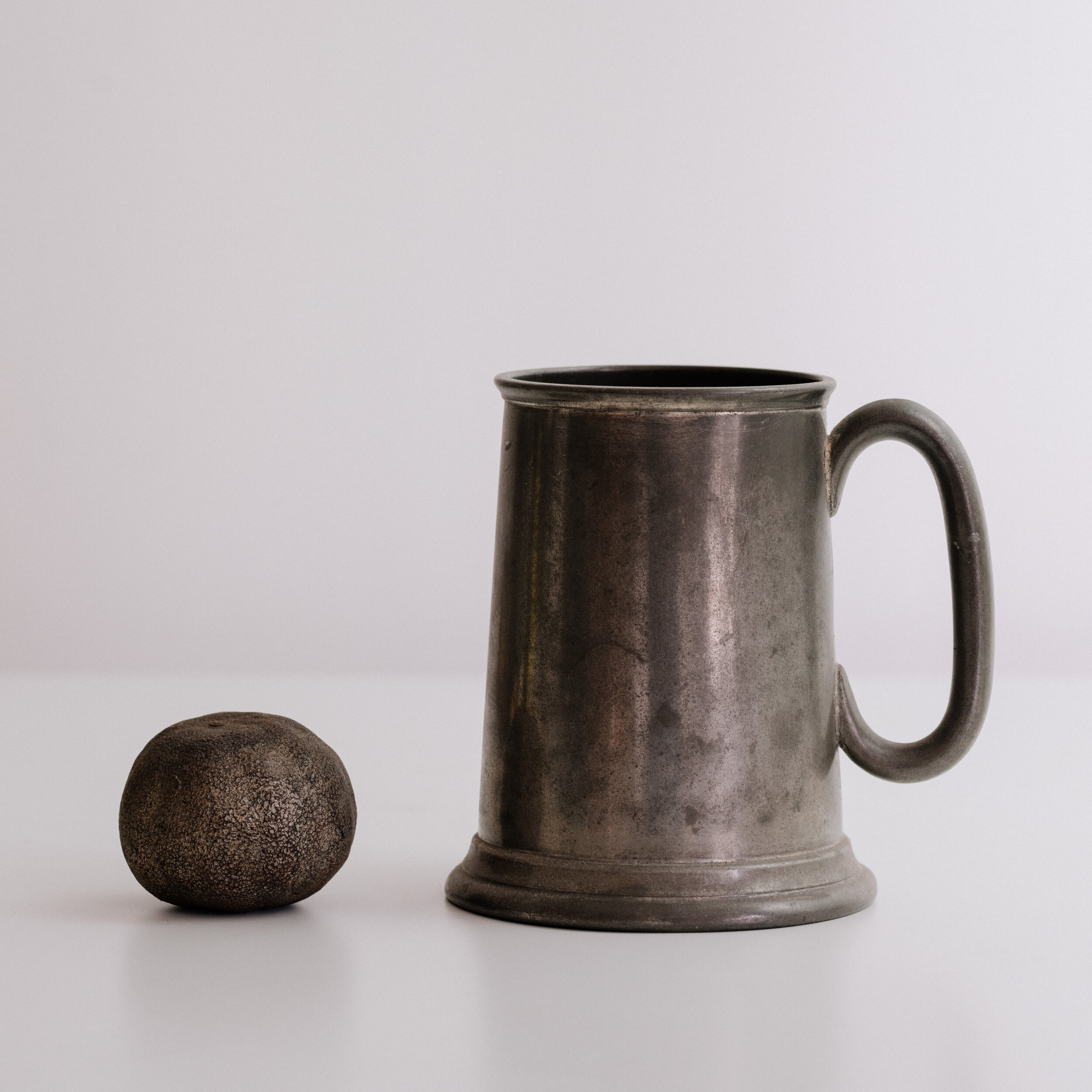
My first Tutorial with Laura today proved very productive, and I received positive feedback. Laura suggested that I add further text to my book 'Mothers Love', and then it could be published or displayed in a gallery. She also suggested the '100-year-old orange’ be photographed on its own rather than with the Tankard. I explained I would be creating an image-based around the Ricard Martinez practice and use this in my project as well as the week one assignment. Laura also suggested that I begin introducing myself when I was a child into the project and concentrate on the Punctum by focusing on details like the close up of my mother’s eye. I have found several photographs relating to me in my youth which I will explore over the coming weeks.

Artist to look at Nanna Hanninen - https://nannahanninen.com

100 Year Old Orange and Tankard

100 Year Old Orange and Tankard

Self Portrait

During the spring break, I experimented with various forms of self-portraiture. I wanted to express my mood at the time, due to personal circumstances, and the current lockdown situation. I decided to melt one side of my face in Photoshop to add to the drama of the image, and best represent me at the time. The initial idea came from the front cover of Peter Gabriel’s third album (1980).

Face Mask

Face Mask

Sara Davidmann - Ken- To be destroyed

I was introduced to this book by a colleague. The book is about a woman trapped inside a man’s body in the 1950s and 1960s. her secret wasn’t discovered unit after her death and a large archive of letters were found. It’s a very moving story. The layout and photography of archive images are particularly interesting to me and my practice and will help me to develop new and hopefully exciting ideas.

Ken:To be destroyed

Ken:To be destroyed

New Ideas for found photography

Anna Fox

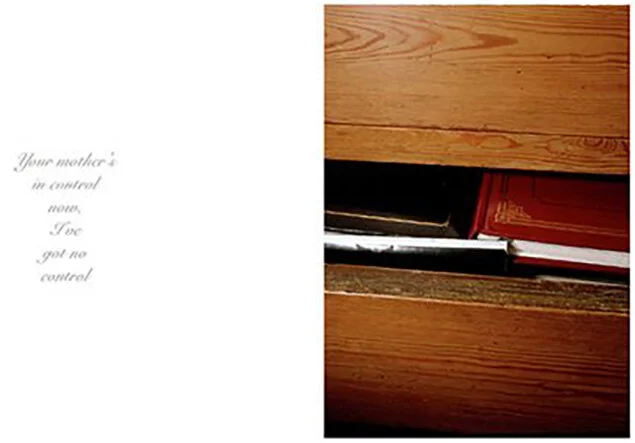
The photographer Anna Fox was one of the inspirations to photograph artefacts, particularly her work My Mother's Cupboards and My Father's Words.She describes it as an "An image-text narrative with a wicked twist exploring a claustrophobic relationship through a series of neat cupboard photographs together with collected cannibalistic words". I see an honesty to her work not afraid of demonstrating the darker side to life. This concept is something I am learning how to do, and hopefully, it will inspire me to be more radical in my approach.

Anna Fox

Anna Fox

War Poster Howard Scott

I wanted to continue my ‘play’ with images from the archive and found this wartime poster by the well known artist Howard Scott. He was an American artist but these poster were used world wide during the war. The message seemed appropriate, I love you Mum, but sometimes it would have been better if you'd kept quiet, at least occasionally.

Poster1.jpg

Experimentation

This image was taken at my parent’s wedding in 1947, just two years after the end of the second-word war. This made me think about what memories my father had at this time. I know he was in Dresden soon after the horrific bombing. I wonder how he coped with such memories. Peer feedback was not positive, I think my Reidesque image has backed me into a corner with nowhere to go except creating a pastiche of Reid’s work.

Dresden.jpg
Wedding and Tank.jpg

The artist John Stezaker influenced image. I intend to alert the viewer to what my father has just been through less than two years before. What thoughts were going through his head at the time of his happiest day? Is it possible to forget the atrocities he had witnessed? Stezaker's work focused on found images from which he created deceptively simple montages which are both 'witty and poignant'.

My interpretation is not a copy of his work but uses his concept of the found picture. I introduced the image of the Churchill Tank (my father was in tanks most of the war), to mask my fathers face to inform the viewer that this is what happened to him, this is his memory. Stezaker quoted from the Guardian newspaper "When we look at a face, we assume that we are looking behind the face for a personality," and goes on to say "By making literal that behindness, I often create something that twists into an image of horror". (Guardian 2014)

John Stezaker

In my 1 to 1 with Sarah, we discussed my work and how it would progress. One of the practitioners suggested was the artist Richard Stezaker. His work 're-examines the various relationships to the photographic image: as documentation of truth, purveyor of memory, and symbol of modern culture. In his collages, Stezaker appropriates images found in books, magazines, and postcards and uses them as 'readymades'. Through his elegant juxtapositions, Stezaker adopts the content and contexts of the original images to convey his own witty and poignant meanings.' https://www.saatchigallery.com/artists/john_stezaker.htm I speculated if I could use this technique in a way that would help explain the narrative in my images. Not using it as a surreal expression but instead introducing images within images which can assist with explaining the narrative. Stezaker photos have informality and a light touch, but the complexity is soon apparent when trying to recreate similar work.

https://www.saatchigallery.com/artists/artpages/john_stezaker_old_mask_v_2.htm

https://www.saatchigallery.com/artists/artpages/john_stezaker_old_mask_v_2.htm

Parents Wedding September 1947 with picture of Father as tank crew January 1945 - Photographers Unkown

Parents Wedding September 1947 with picture of Father as tank crew January 1945 - Photographers Unkown

Interpreting Stezaker work

Interpreting Stezaker work