Week 9 - Enter, the Academy?
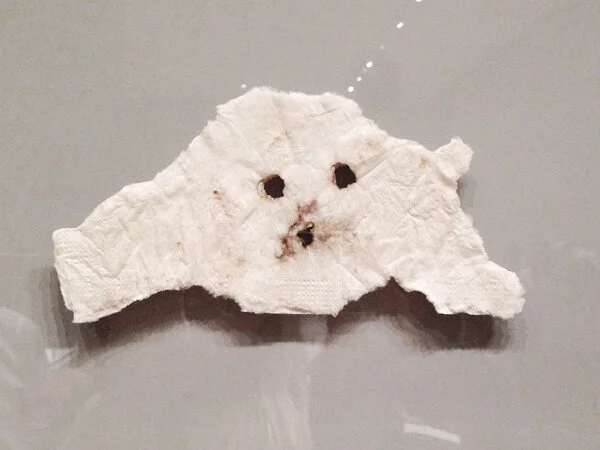
Picasso Head of a Dog, paper napkin, 1943
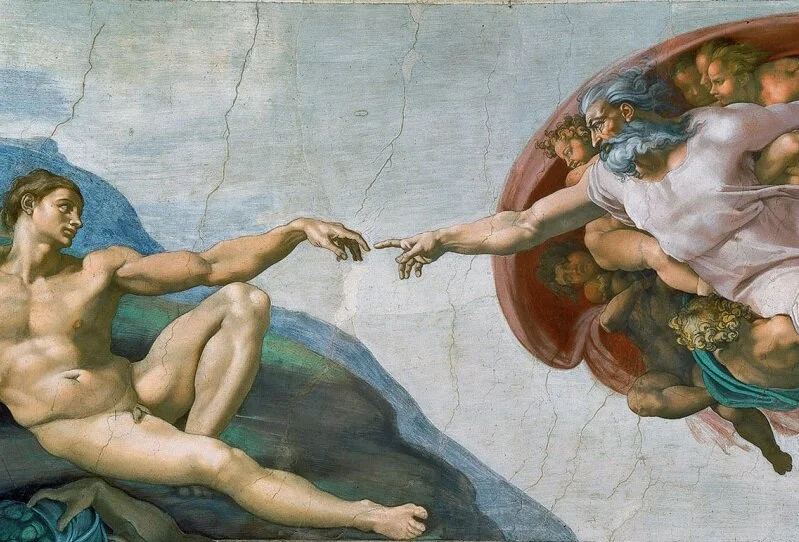
Michelangelo, "The Creation of Adam" (crop).
What makes good art? Is it the technique, skill, time, age, rarity, or is it its value? . Berger says in his book 'Ways of Seeing' (Berger, 1972, p21), "This value is affirmed and gauged by the price it fetches on the market. But because nevertheless "a work of art" and art is thought to be greater than commerce - its market price is said to be a reflection of its spiritual value". The image of Picasso's napkin folded into a dog with the mouth and eyes burnt by his cigarette is a prime example in my view. It is interesting because we know that Picasso was a great artist. Not because the art is great?
Week 8 - Responses & Responsibilities
My earliest memories of war images were at the age of 10 watching the BBC’s World at War in 1973. The haunting theme tune always brings back memories of the many horrific scenes. I often find music to be a contributor to the narrative and in turn, influences our feelings to what we see. We are so accustomed to atrocities shown on the TV and social media that we have become numb to it. I have attached a video of drone footage of Auschwitz which includes a soundtrack. The footage is of the present day but still manages to evoke memories of the horrors.
Week 6 - A Sea of Images
Week 5 - The Gaze
This photograph shows my dear friend Jo who has been suffering from Multiple Sclerosis for over 25 years. She has what's called primary progressive MS, which means a slow but continual decline in her mobility. Now almost confined to bed, she relies on carers and friends to help her.
This picture, taken last Christmas shows one of the more happier moments. The carers (who are amazing) gave Jo a Christmas hat which she wore, and I took a photograph. So why did I feel guilty after I had made it? In truth, I felt voyeuristic and uncomfortable, yet it was of a happy moment. I have an issue photographing people generally, and I am uncomfortable asking a stranger in the street. Even family pose a challenge to me although I do it if requested. I think in Jo's case, I felt like I was taking advantage of her situation, would I like to be photographed in this situation, probably not. Is this where the uncertainty comes from, in applying my attitudes and feelings about me to my subjects. I wonder if the same applies to the artefacts found in my parent's collection. I indeed questioned should I publish the letter from my Father to my Mother on their wedding day.
‘The true content of a photograph is invisible, for it derives from a play, not with form but with time. One might argue that photography is as close to music as is painting. I have said that a photograph bears witness to human choice being excercised. this coice is not between photographing at X and Y : but between photographing at X moment or at Y moment’. Berger p19
See https://www.robertmcmillan.photography/journal/more-archive-material
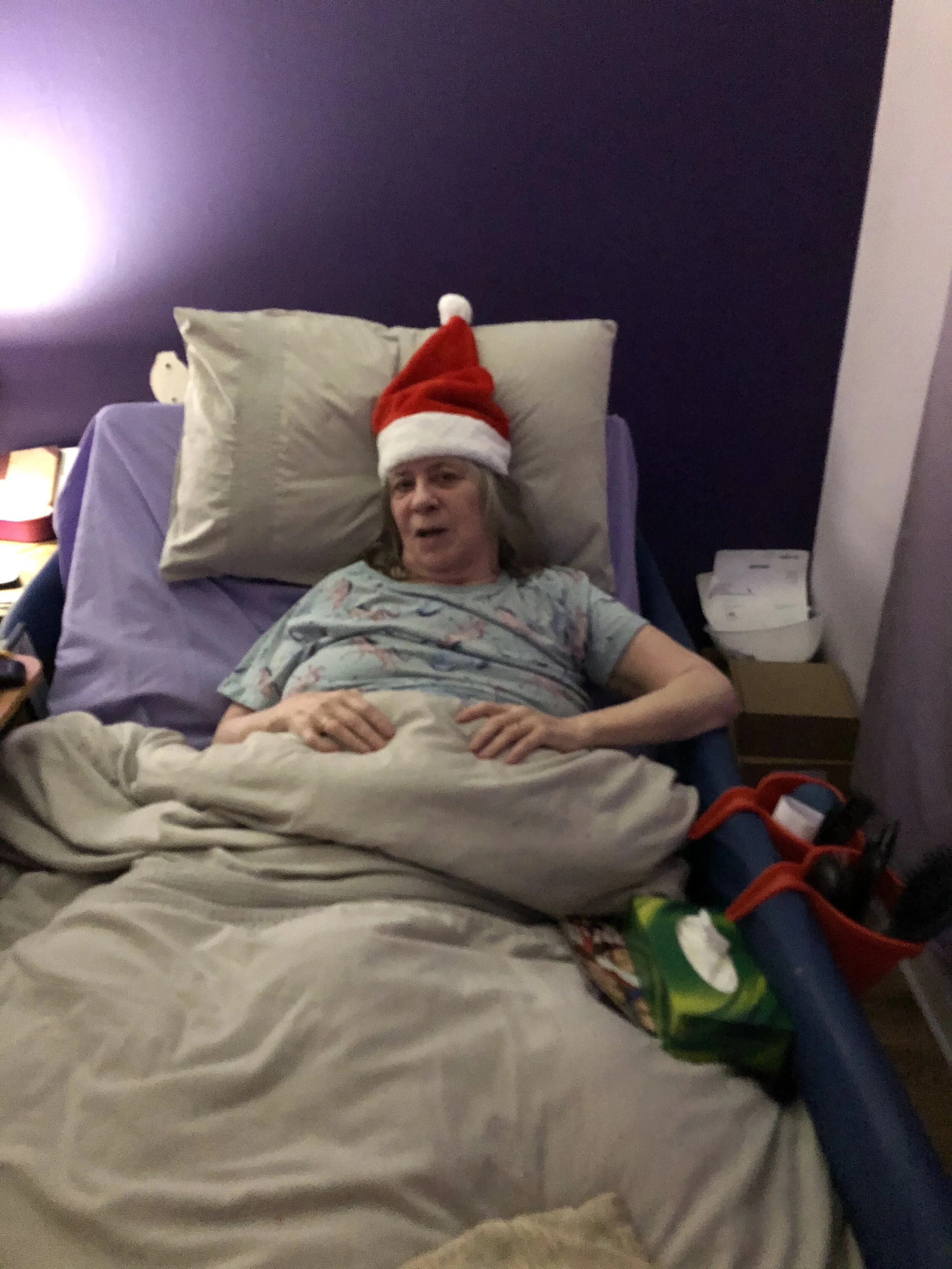
My friend Jo who has MS confined to bed
Week 4 - The Image World
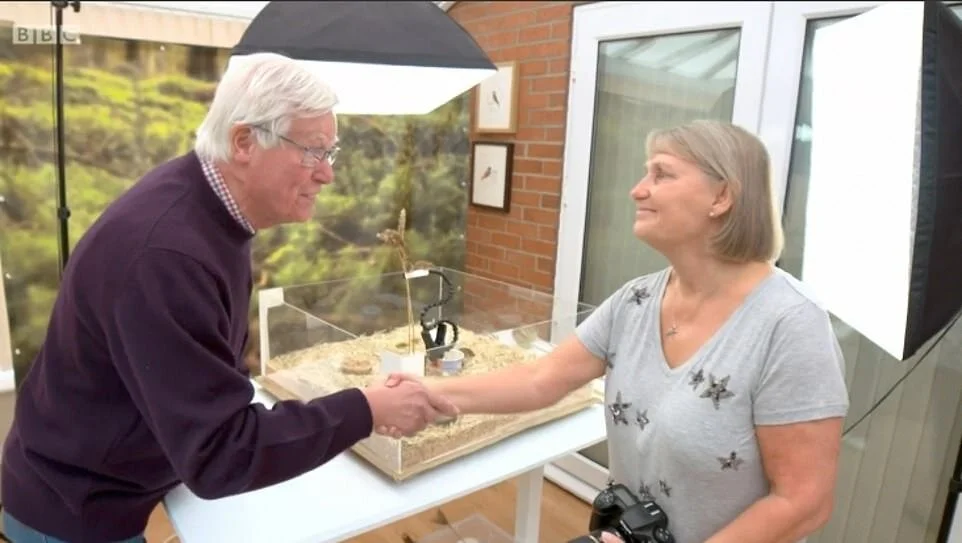
This term has proven difficult in terms of the COVID -19 epidemic, which has limited my ability to research locations. I had to concentrate on the archive material I had and use this as the basis of my work. I had a few artefacts to use and many photographs. I had set up a studio table in my study with a simple lighting setup. It was a floor lamp with a daylight bulb. This setup proved useful by bouncing the light off the ceiling, which produced a soft glow. How to photograph artefacts effectively was challenging. I looked at other practitioners such as Anna Fox, Martina Lopez, and Gillian Wearing as advised by Sarah in a recent webinar. I found that experimentation was the best method, so I started working with different setups to achieve my goal. My technique, so it turned out, was to utilise the artefacts as an anchor for the pictures. In this situation, I used a vase of my mothers which I deliberately defocused to concentrate the viewer on to the photograph. I was pleased with the outcome of this series of images and received good feedback from Sarah and Steph.
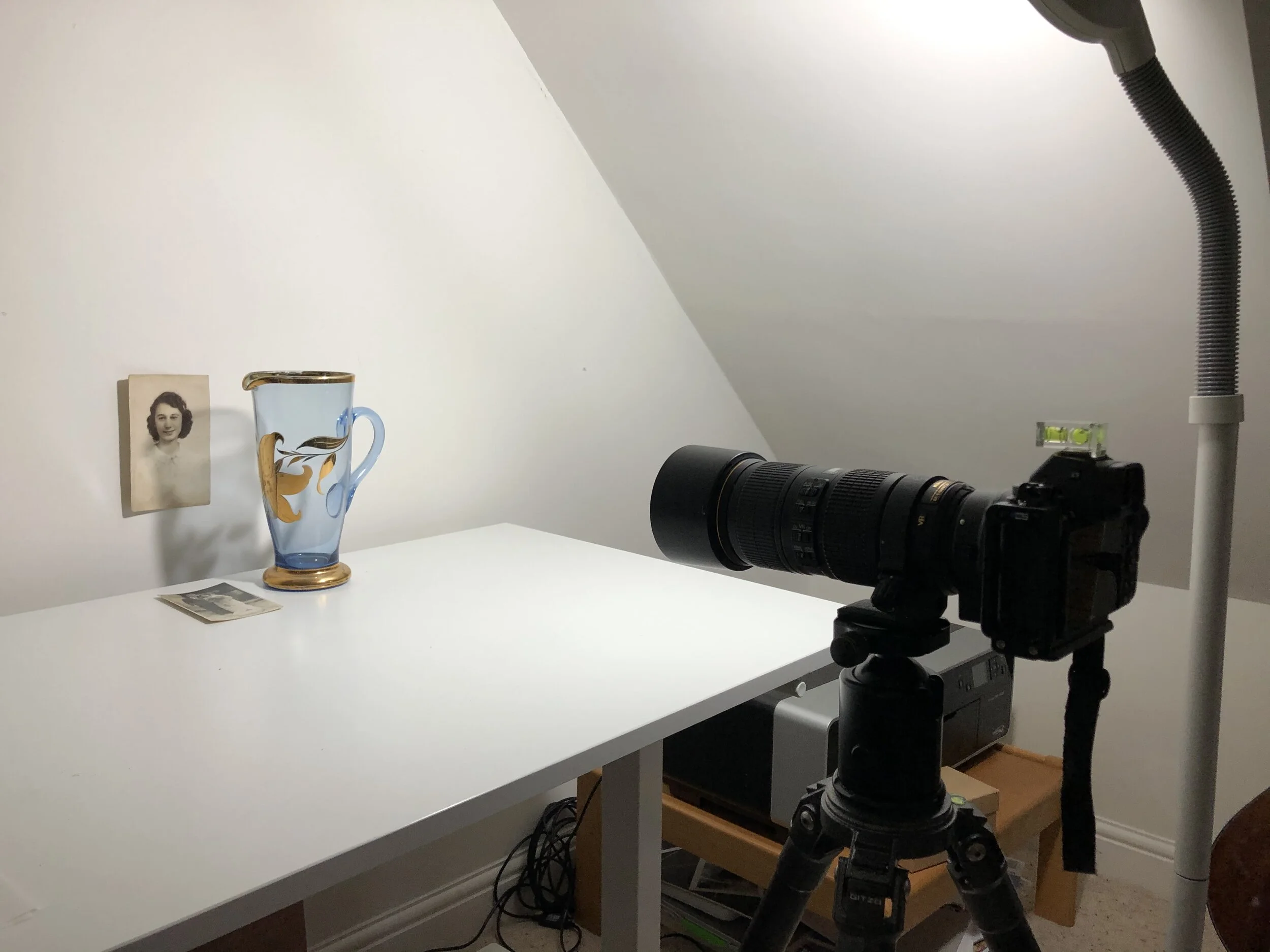
Studio setup to rephotograph artefacts
Week 3 - Constructed Realities
For a while, I was interested in wildlife photography but soon found it very time-consuming. The idea of being out in the wilds hunting for animals to photograph appealed to me. The caveat is the time involved, as an amateur photographer, working a full-time job, it wasn't possible to spend days, even weeks looking for that often elusive animal in a photogenic pose. It is possible to join workshops where you can be taken to hotspots where a snap is guaranteed and satisfies your photographic needs and justifies the considerable cost in equipment. I soon found that I was questioning the ethics surrounding this hobby. For my photographic satisfaction, I was intruding along with large groups and disturbing the animal's habitat. There must be thousands of pictures of just about every mammal on the planet why do we need more? This brings me to my point cute sells, so using an adorable animal in a stunning pose is a recipe for success. Taking the picture is another matter, and in some cases nigh on impossible. So the photographer has to stage them, they go from the hunter to the farmer using captive animals. There have been a few notable instances where this has occurred most famously the winner of Wildlife Photographer of the Year in 2017 where the anteater is a taxidermy specimen. Another noteworthy example, (but at least the animal was alive), is the BBC 2019 Countryfile winner Michelle Howell's 'An apple a day'. The image is derided for being a staged photo and not complying with the rules.

https://michellehowellphotography.com/2019/09/
https://michellehowellphotography.com/2019/09/
I do ask myself is there anything wrong in 'farmed' pictures of wildlife other than it is inherently wrong to cage any wild animal. The viewer will perceive indigenous animals (to the UK) will not be captive. Therefore they work as an image, but is it morally right?
Week 2 - The Index and the Icon
' 'Thus the photograph is not a substitute for vision, not even a modified or extended form of vision, but simply the inevitable outcome of a certain series of events'. Snyder, Allen, 1975, p157
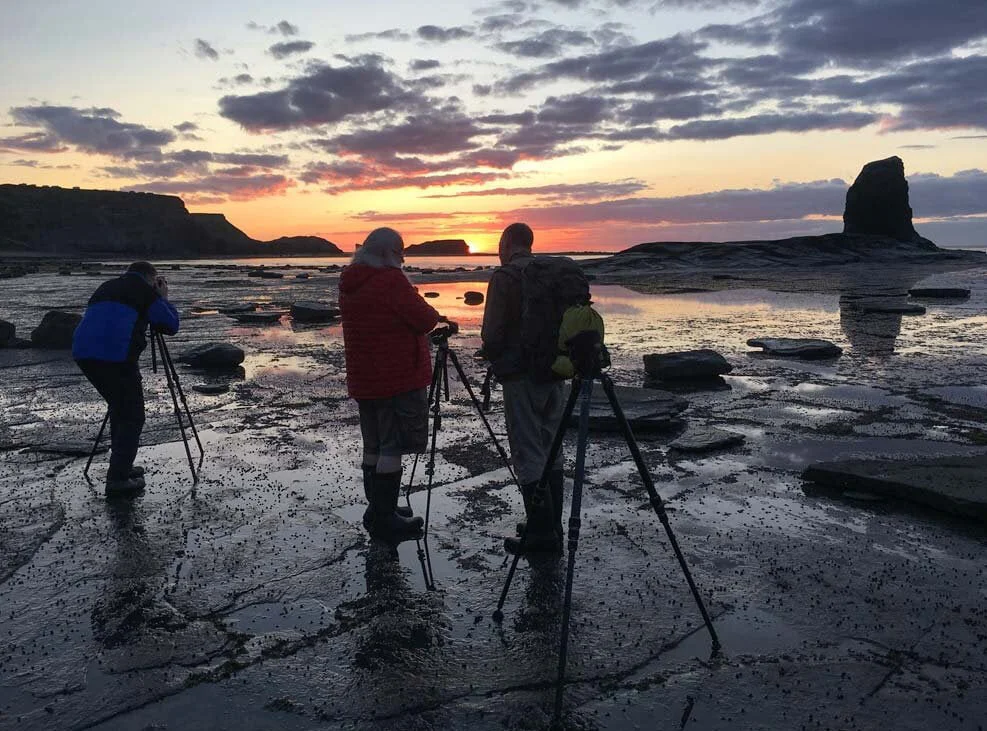
I began my practice with landscape and wildlife photography. I liked to think that my photos were honest in their approach while being pleasing on the eye. I hadn't any training other than what I had seen in the popular magazine of the day and the odd workshop I attended. All these populist methods taught everyone the same thing. Good light, composition and good locations. Consequently, all the photos looked the same, shot at sunset, or even better sunrise as the light was good and it would be free of people. It wasn't apparent to me at the time but using these rules created the 'beautiful' picture and consequently the same as everyone else's. As long as you could put together a decent composition, usually copied from Jo Cornish or the like, you were good to go. We would even search out the same locations to ensure we had a higher chance of success. The popularisation of digital photography was to blame for this as it made the hobby more accessible. Many so-called professional photographers latched on to this and made a significant living from it. This form of regimentation of photographic practice nearly made me give up photography altogether. To look through a lens is to see the world as you interpret it, not in the mind's eye of others. Of course, photographers have a myriad of options to look at the world, camera, lens, shutter speed, film, to name a few. How we use the camera is our interpretation of what we see. We subconsciously choose to frame our pictures the way we want to describe it to others. It is our choice to leave people in or out of the photograph, and as Snyder and Allen argue 'The question is whether these mechanical connections are significant to us when we look at and try to understand the final picture'. Is the picture an accurate representation of what we see and does that matter? My photographic practice has changed, and yes, some think it peculiar. My friends wondered why I am no longer interested in the picturesque, what's the point? My pictures I hope now have a narrative, a truthfulness. They possess more than the beautiful; they have meaning, and that is more important to me than a beautiful sunset.
http://www.joecornishgallery.co.uk/images/products/zoom/1575478161-41348700.jpg
Week 1 - The Shapeshifter
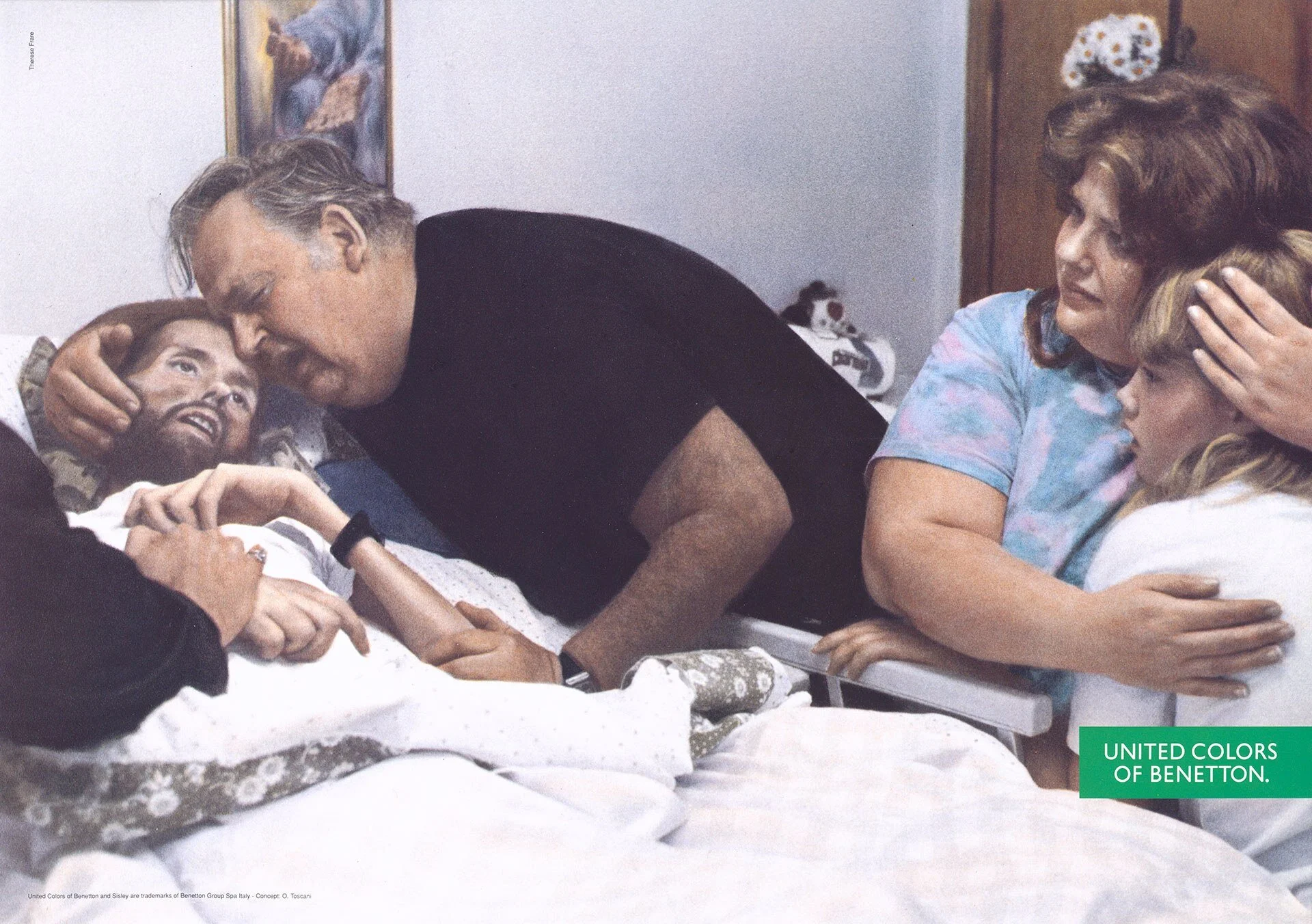
The 'consumption' of images in today's culture has reached saturation point and no surprise that the advertising agency's employ shock tactics to draw the viewers attention. Let us not forget these companies are not doing it for art's sake; they are in it primarily to make a profit. Using images that shock, to lift a campaign from the ordinary, but is this the easy option. Is it right to use images intended for one purpose and then used for another? In some circumstances, maybe and many working photographers rely on this to make a living. However, when people are involved, I think it is morally wrong. David Kirby's parents approved his image used in the Benetton advert, but what about David Kirby, would he have liked this photo shown in an advertising campaign? Yes, he's dead but surly the dead have rights too.
‘These dead are supremely uninterested in the living: in thoses who took their lives; in witness- and in us. What would they have to say to us? We - this ‘we’ is everyone who has never experienced anything like what they went through - don’t understand’. Sontag, Regarding the pain of others, p113
https://www.vogue.co.uk/gallery/benettons-best-advertising-campaigns